The role of producer fees
in deposit return systems
As of April 2026, deposit return systems (DRS) are operational in over 60 jurisdictions worldwide, covering more than 400 million people.
In high-performing systems, producer fees play a critical role in ensuring that beverage container collection and recycling are adequately funded while keeping incentives aligned with circular economy goals.
Reloop’s new fact sheet explains what producer fees are, how they are typically structured and why keeping costs with producers is considered best practice.
Download the fact sheet
-
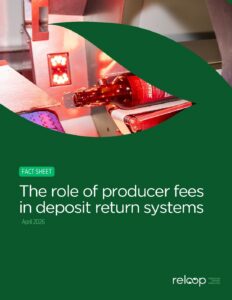
The role of producer fees in deposit return systems
Fact sheet on producer fees in deposit return systems, covering funding models, global examples, and their role in supporting recycling and circularity.
What is a producer fee?
High-performing deposit systems rely on multiple revenue streams, including unredeemed deposits and material sales, to cover system costs. When these revenues are insufficient, producers pay a per-unit container fee to cover the remaining net costs of collection, handling and recycling.
Fees are typically reviewed and adjusted annually/bi-annually to reflect changes in return rates, material values, and operational costs.
Producer fees in system funding
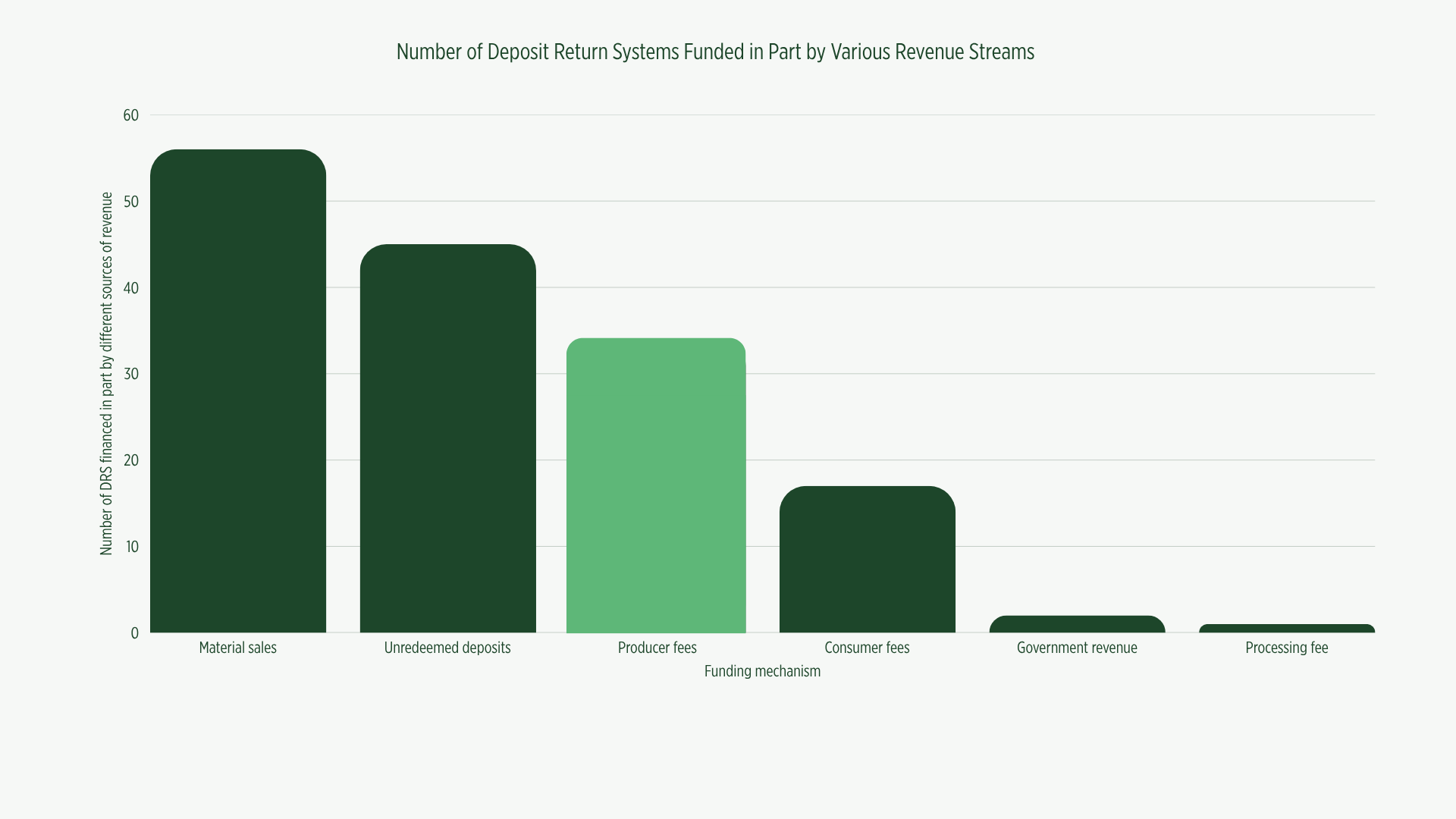
Over half of deposit return systems rely on producer fees as a revenue source, alongside material revenues and unredeemed deposits.
This approach reflects best practice because it keeps financial responsibility with producers (not consumers), in line with Extended Producer Responsibility (EPR) principles.
How producer fees are used around the world
Approaches to producer fees vary widely across regions, shaped by policy choices about who should bear the costs of collection and recycling.
In some systems, producers cover net costs through structured fees, while in others these costs are shifted partially or largely to consumers.
The public availability of producer fee information, including the methodologies used to determine the fees, varies by system.
In some jurisdictions, fees are published on the system operator’s website, but in many cases, fee schedules are confidential or outlined only in contractual agreements between producers and the system operator.
Want the full picture?
This fact sheet sets out how producer fees are designed, how they work in practice across global deposit return systems, and why they are essential to delivering effective, circular outcomes.
Get the latest from Reloop
We’ll send occasional email updates with details of our work. You can unsubscribe from our emails at any time and we won’t pass on your information to anyone else.
