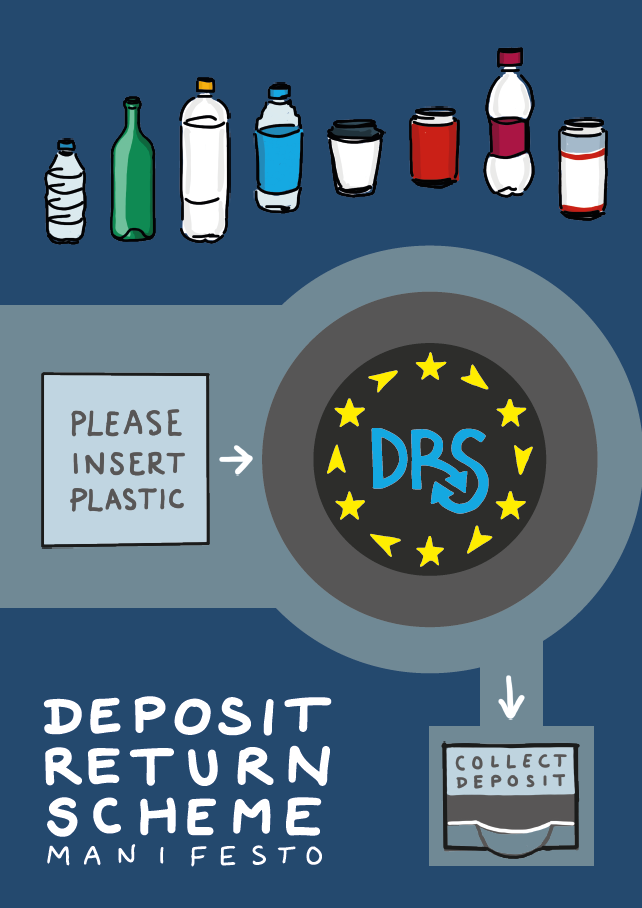
Zero Waste Europe has prepared a short primer explaining how deposit systems work and how they can be used to help Europe move towards a circular economy.
Reloop News
Zero Waste Europe has prepared a short primer explaining how deposit systems work and how they can be used to help Europe move towards a circular economy.

Less than 24 hours after Scotland became the first part of the UK to announce details of such a scheme, environmental campaigners across the globe united in an international day of action to urge more countries to adopt a deposit return scheme (DRS) for drinks cans and bottles.
Efforts to reduce marine litter and eliminate plastic waste (particularly the single-use kind) were some of the key themes of 2018, with European Union Parliament and Council ending the year with a provisional agreement to phase out problematic single-use plastic (SUP) items by 2021
Reloop has prepared a short backgrounder to summarize some of the key elements of the Directive, including what measures have been proposed to minimize the usage of single-use plastic items.
Reloop has prepared a short backgrounder to summarize some of the key elements of the Single-Use Plastics Directive.
Menstrual products generate extraordinary amounts of waste. It has been estimated that an average woman disposes approximately 150 kilograms of tampons, pads, and applicators in her lifetime, around 90% of which is plastic.

There’s no denying it; the world is experiencing a plastic waste crisis and it’s growing – but so is public awareness and action.
This report sets out the latest thinking on how we can more sustainably manage and tackle single-use plastic pollution.
This article makes the business case for deposit return and examines how it can actually be good for companies, helping them to gain greater control over performance and costs and reduce their risks.