EPR Operational Tool
Recycled content
Ensuring materials collected and financed through EPR are reintegrated into new products and packaging.
Ensuring materials collected and financed for reuse
Recycled content is a critical complement to EPR schemes, helping close the loop by ensuring that materials collected and financed through EPR are reintegrated into new products and packaging. Mandating recycled content in products and packaging strengthens the environmental outcomes of EPR by creating demand for high-quality secondary materials and reducing the overall packaging footprint, bringing producers closer to their sustainability goals.
As a tool, recycled content mandates:
- Stimulate demand for secondary materials: EPR schemes collect and process packaging waste, but their environmental objectives fall short if collected materials are not reused. Recycled content requirements ensure producers have a stake in the quality and usability of the materials their systems generate.
- Improve system design and material quality: When producers depend on recycled content, they are more likely to support system improvements that yield cleaner, higher-quality recyclables, such as better sorting infrastructure, clearer design-for-recycling standards, and more consistent material flows.
- Advance broader circular economy goals: Recycled content mandates reduce reliance on virgin materials, lower greenhouse gas emissions, and help meet climate and sustainability targets
- Can be implemented through EPR or complementary policies: Recycled content requirements can be embedded in EPR legislation or introduced as standalone mandates. Either way, they are most effective when aligned with EPR schemes that give producers control over material streams and responsibility for quality.
Ultimately, recycled content mandates are about ensuring that materials collected through EPR schemes don’t just get processed, they get used again in new products and packaging. It is the vital link between material recovery and sustainable production, and a key driver of circularity.
Producer Responsibility Organisations
Producer Responsibility Organisations (PROs) can play a pivotal role in implementing recycled content obligations through collective R&D, joint procurement of post-consumer waste, and incentivising recyclates use via eco-modulation of EPR fees.

A Call for Action on Recycled-Content Mandates
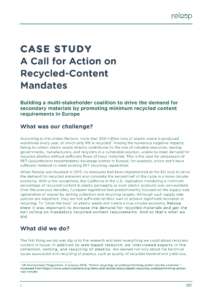
Case study on building a multi-stakeholder coalition to drive the demand for secondary materials by promoting minimum recycled content requirements in Europe.
A national recycled content requirement
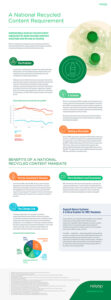
Fact sheet about implementing a minimum recycled content requirement for plastic beverage containers.
In My Opinion: It’s time for recycled-content mandates
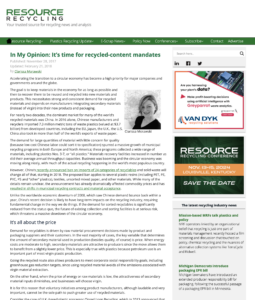
Recycled-content mandates should be a high priority, accelerating the transition to a circular economy.
Policy Guidelines for Recycled Content Mandates
Framework for effective and responsible scoping of recycled content mandates by defining the markers of successful mandates and offering succinct policymaking recommendations.

Links to external reading
Sustainable Packaging Coalition (SPC). (2025). Post-consumer Recycled Content (PCR) Within EPR for Packaging.
Association of Plastic Recyclers. Recycled Plastic Content Requirements.

Your guide to Extended Producer Responsibility.




EPR Operational Tool

Direct financial incentives to drive higher beverage container collection rates.